Graphics technology is entering a transformative phase as 2026 reshapes how games and work applications leverage GPUs. The latest architectures blend immense compute with smarter data movement, AI acceleration, and advanced rendering features. Energy efficiency and thermal management are no longer afterthoughts; they determine whether high-end GPUs sustain peak performance in compact builds and long gaming sessions. Price-to-performance dynamics, supply constraints, and software ecosystems also influence buying decisions in meaningful ways. This section outlines why 2026 marks a turning point, highlights the architectures driving the change, and provides upgrade guidance for both gamers and professionals.
Why 2026 Is a Turning Point for GPUs
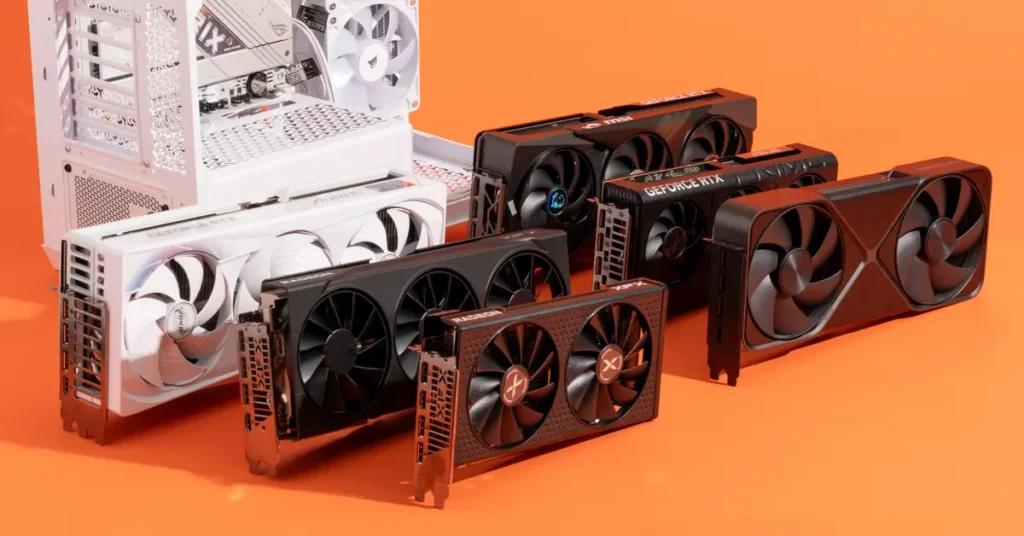
2026 has arrived with more than faster clocks and more CUDA cores. The real shift is in how GPUs manage compute across gaming, content creation, and AI tasks, letting a single card handle increasingly diverse workloads without constant performance cliffs. Architectures now emphasize not just raw power but how data moves through memory, caches, and display pipelines, reducing stalls and keeping frame rates steady even when scenes grow more complex. This means higher texture detail, smarter noise reduction, and more realistic lighting at resolutions once considered unrealistic for real-time rendering. For gamers looking to combine performance with entertainment, platforms like Winnita Casino show how advanced graphics can enhance both gaming and streaming experiences. Consumers should expect a broader range of capabilities from mid-range cards, not just top-tier flagships.
Another dimension of 2026’s turning point is efficiency: better voltage control, smarter thermal design, and more aggressive dynamic scaling allow GPUs to sustain higher performance for longer without overheating. For gamers and creators alike, that translates into steadier frames during long sessions and more reliable rendering timelines, especially in power-constrained systems. The market also rewards architectural innovations such as chiplet designs and advanced interconnects, which unlock greater performance-per-watt and easier scaling across product stacks. In practice, this combination means quieter cooling, cooler operation, and the ability to push higher settings without dominating your power budget.
Finally, software maturity matters as much as hardware. Driver optimization, developer tools, and real-time upscaling and AI features become more accessible, letting both new and seasoned users squeeze extra quality from existing displays. The convergence of hardware and software accelerates real-time ray tracing, denoising, and smart rendering paths, enabling more immersive experiences across AAA titles and creative workloads. For buyers, the takeaway is clear: 2026 GPUs are designed to perform better while consuming less power at realistic workloads, making the upgrade more compelling for a wider audience.
With these shifts in mind, consumers should assess not only raw frame rates but also system balance, feature sets, and future-proofing considerations to decide when and what to upgrade. This context sets the stage for deeper dives into architectures and upgrade strategies in the sections that follow.
Key Architectures and New Technologies
Modern GPUs are built around architectures that balance compute, memory bandwidth, and intelligent software workflows. This shift is not just about more shader units, but about smarter data movement through memory hierarchies, caches, and display pipelines, reducing stalls and keeping frame rates steady even as scenes grow more complex.
- Chiplet-based GPU designs leverage modular packaging and high-speed interconnects to scale cores and memory channels while improving yields and thermals across gaming and creative workloads.
- AI accelerators and dedicated tensor cores are embedded in consumer GPUs to speed up real-time upscaling, denoising, and AI-assisted rendering without needing a separate accelerator.
- Next-generation memory architectures, including faster GDDR6X and high-bandwidth HBM options, deliver more bandwidth for large textures, complex scenes, and AI workloads at higher resolutions.
- Advanced ray tracing hardware with optimized traversal and denoising accelerates lighting, shadows, and reflections, producing film-like realism while maintaining smooth frame rates in modern titles.
- Power efficiency gains come from smarter voltage control, dynamic clocking, and cooling innovations that sustain peak performance longer and reduce thermal throttling in compact builds.
Together, these technologies form a cohesive platform that empowers developers to push visuals and responsiveness further than before.
Who Should Upgrade in 2026
Upgrade decisions in 2026 hinge on your current hardware, display targets, and workload mix. If your GPU is more than five years old, you will likely notice meaningful gains in both gaming and creative tasks by moving to a current-generation card once you consider your display resolution, refresh rate, and memory needs. For high-refresh 4K gaming or intensive content creation, investing in a robust GPU with ample VRAM and memory bandwidth typically yields the most value, especially when you pair it with a capable power supply and motherboard that can handle peak loads. Even at 1440p, there are compelling reasons to refresh if you routinely push high settings and rely on features like AI upscaling and hardware-accelerated encoding.
Budget-minded buyers can still gain noticeable improvements by stepping up to a mid-to-high tier card that offers better efficiency and newer feature sets, such as improved ray tracing, DLSS/FSR upscaling, and more capable encoding pipelines. For laptop users or small form factors, the gains in power efficiency and thermal management can translate to sustained performance without frequent throttling, making a newer mobile GPU a worthwhile upgrade. Those who rely on GPU acceleration for content creation should weigh memory capacity and bandwidth as heavily as clock speed; large 3D scenes, high-resolution video timelines, and AI-driven tasks benefit from more VRAM and broader memory interfaces. When evaluating upgrades, consider resale values, bundles, and promotional pricing, as these can significantly affect the total cost of ownership. Finally, ensure your upgrade aligns with your CPU, RAM, and storage to avoid bottlenecks and to maximize the overall system balance.
Core Features, Benefits, and Technical Specifications
Choosing the right graphics card for 2026 involves balancing raw performance with efficiency, features, and long-term value. This section breaks down the core attributes that influence everyday gaming, creative workloads, and future-ready graphics technology. You will see how performance metrics, memory configurations, and thermal design shape practical recommendations. By outlining these elements, readers can align card choices with their monitor resolution, power budget, and workspace demands.
Performance Metrics: What Matters
Performance metrics translate hardware specs into real-world gaming and work outcomes. Use these indicators to compare cards across the tasks and settings that matter most to you.
- Average FPS across 1080p, 1440p, and 4K, highlighting consistency during action-heavy scenes and avoiding sudden drops that frustrate players in online multiplayer.
- Frame time variability and 99th percentile latency to quantify stutter risk and input lag under competitive shooters at high frame rates.
- Rendering throughput and IPC efficiency under real-world workloads, showing how architectural features translate to faster scene builds and smoother gameplay.
- Ray tracing performance and DLSS/FSR upscaling quality, measuring both raw RT throughput and perceived image fidelity at various settings across resolutions.
- Memory bandwidth utilization and cache efficiency, indicating how quickly data moves between VRAM and cores during texture streaming and shading.
In practice, weighting these metrics by your typical resolution and workload yields the most meaningful guide to selection. Always consider how drivers, game optimizations, and cooling overhead affect sustained performance.
Memory, Bandwidth, and VRAM Explained
Memory, bandwidth, and VRAM are the unsung backbone of modern GPUs. The VRAM size sets the ceiling on texture detail and large scene data, while memory bandwidth governs how quickly that data can move between the graphics cores and memory. In 2026, GPUs commonly deploy GDDR6X for mainstream cards and the more specialized HBM variants for high-end accelerators, each offering different trade-offs in latency, power, and physical footprint. Understanding these choices helps buyers predict how a card will handle high resolution textures, complex shaders, and AI-accelerated tasks over time.
VRAM capacity matters more for certain workloads than others. For 1080p gaming with a single high-detail texture pack, 8 to 12 GB can be sufficient, but at 1440p or 4K with modern games, 16–24 GB provides headroom to maintain detail levels during long sessions. Content creators running large textures, 3D models, or video effects benefit from larger memory pools and faster bandwidth to avoid stuttering when data is streamed in real time. Memory compression techniques and on-die caches further help convert raw bandwidth into practical performance, reducing the penalty when texture tiles or scene data do not fit in cache.
Bandwidth and bus width are critical, but they matter in combination with latency and caching. A wider memory interface accelerates data transfer but can introduce timing complexities that memory controllers must manage. GPU designs mitigate this with advanced prefetching, larger caches, and more efficient interconnects. These factors determine how quickly textures, shaders, and post-processing passes can be fed to the render pipeline, especially at higher resolutions and with ray tracing workloads.
As buyers compare graphics cards, look for stated memory bandwidth in GB/s, bus width in bits, and the type of memory specified. Real-world results come from a mix of these numbers plus architectural efficiencies, driver optimizations, and memory compression effectiveness. The goal is to balance capacity and speed with power draw and thermals, so memory-rich configurations do not force unnecessary cooling or higher power consumption for marginal gains. In short, memory and bandwidth decisions should align with your target resolution, texture quality, and the demands of your typical creative or gaming workflow.
Power Consumption, Cooling, and Form Factor
Power consumption remains a practical constraint on GPU choice. The peak power draw (TDP) provides a guideline, but real-world power use varies with clock states, workload, and cooling efficiency. High-end GPUs typically demand robust power delivery, multiple PCIe power connectors, and ample 12V rails. For many systems, a 750–1000W power supply provides headroom for vigorous gaming sessions and potential overclocking.
Cooling design directly influences noise levels and sustained performance. Air-cooled cards with dual or triple fans offer strong cooling at reasonable noise, while liquid-cooled models push thermals lower and clock speeds higher but require more space and careful routing of cables. In compact builds, smaller cards or blower designs fit better but may exhibit higher temperatures and audible fan activity under load.
Form factor matters for space and airflow. Standard two-slot designs fit most mid-tower cases, while two-and-a-half- or three-slot cards demand larger cases, better vertical clearance, and enhanced airflow. Case fans, intake masks, and GPU backplates can influence temperatures and comfort for long gaming or rendering sessions.
When estimating PSU needs and cooling, start with the GPU’s documented peak power and add a buffer for the rest of the system. Consider efficiency ratings (80 Plus Gold or better), cable quality, and the potential for future upgrades. A well-mated cooling solution reduces thermal throttling, maintains stable boost clocks, and keeps acoustic levels acceptable during extended use.
Side-by-Side Model Comparison
Choosing the right graphics card in 2026 means weighing performance, price, power draw, and feature sets against your specific workloads. This side-by-side model comparison highlights flagship GPUs and notable midrange options so you can quickly see where each model shines. We evaluate gaming performance, creative workloads, energy efficiency, and advanced features like ray tracing, AI acceleration, and memory bandwidth to give you a holistic view. The following sections present a compact flagship table, followed by price-to-performance tiers and real-world use cases to guide your buying decision. Keep in mind your target resolution, preferred frame rates, and whether you value silent operation or raw throughput, as these choices shape the best GPU for you.
Top GPUs of 2026 at a Glance
The table below consolidates core specifications, performance indicators, pricing, and power envelopes for the most relevant 2026 GPUs, enabling a transparent cross-brand comparison that informs buying decisions for gamers and creators alike across a range of budgets, resolutions, and workloads. While the numbers provide a solid baseline, real world results depend on driver maturity, game and application optimizations, memory bandwidth utilization, and thermal headroom, so plan to supplement specs with practical testing in your own setup.
| Model | Architecture | Process | VRAM | Bandwidth | FP32 TFLOPs | Power | MSRP | Ideal Use |
|---|---|---|---|---|---|---|---|---|
| NVIDIA GeForce RTX 5090 | Lovelace-Next | 3 nm | 24 | 1100 | 95 | 520 | 1999 | 4K gaming with RT and AI workloads |
| NVIDIA GeForce RTX 5080 | Lovelace-Next | 3 nm | 20 | 1000 | 85 | 470 | 1399 | 4K/1440p gaming with strong RT |
| AMD Radeon RX 8900 XT | RDNA4 | 4 nm | 24 | 980 | 86 | 430 | 1199 | 4K gaming with solid raster and efficiency |
| AMD Radeon RX 8800 XT | RDNA4 | 4 nm | 16 | 850 | 72 | 380 | 899 | 1440p or budget 4K with modern features |
| Intel Arc A980 | Xe-Next | 4 nm | 24 | 720 | 60 | 320 | 399 | AI-friendly mid-range with solid productivity |
Additionally, raw numbers rarely capture software optimizations and driver maturity, which can swing margins in both directions across titles and tasks. For the typical gamer or creator, the most telling takeaway is how often the card hits 4K targets with RT enabled while remaining responsive in production workloads.
Price-to-Performance Tiers
The following price-to-performance tiers categorize GPUs by value, balancing raw performance against cost across gaming and creator workloads.
- Flagship premium: RTX 5090 delivers unparalleled 4K performance and top-tier ray tracing, but its price and power draw limit practicality to enthusiasts with ample budget.
- Ultra-premium value: RTX 5080 offers outstanding 4K performance and strong productivity, delivering a balanced mix of speed, efficiency, and features at a more approachable price than the flagship.
- Value-focused raster: RX 8900 XT represents a compelling price-to-performance ratio, delivering solid rasterized gaming and efficiency that stack up well against higher-priced rivals.
- Balanced mid-range: RX 8800 XT offers capable 1440p or budget 4K performance with modern features, making it a practical pick for gamers who value efficiency over absolute speed.
- Budget-ready AI: Intel Arc A980 provides AI-acceleration advantages and solid productivity at a lower price point, offering meaningful value for budget-conscious buyers and light content workloads.
These tiers provide a practical framework to align your budget with expected performance in real-world titles. Pair the tier guidance with personal benchmarks to confirm the best fit for your setup.
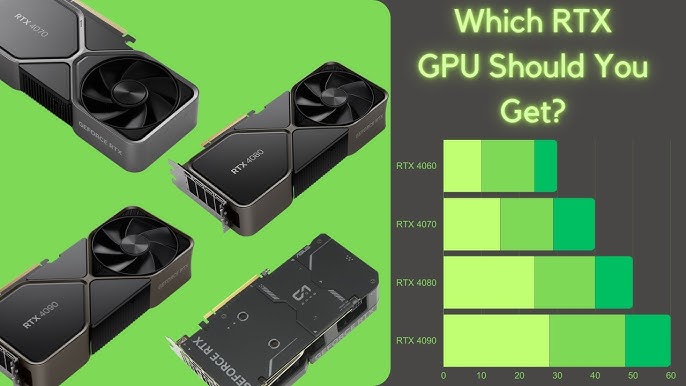
Real-world Benchmarks and Use Cases
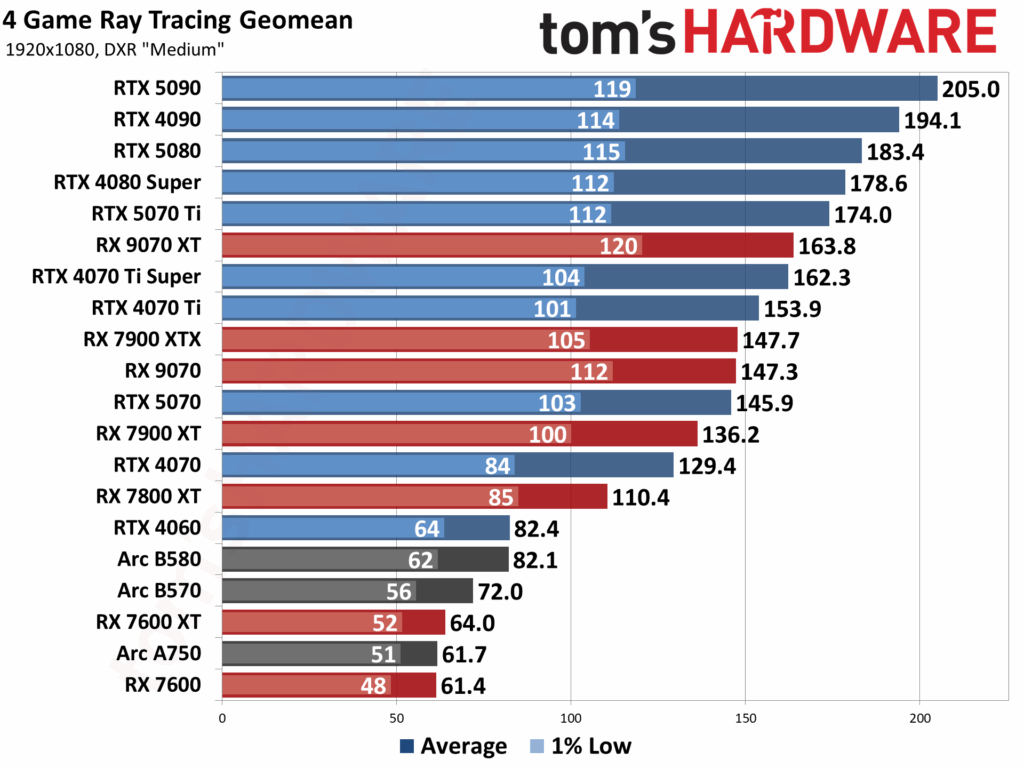
Across 1080p gaming, most 2026 GPUs deliver very high frame rates in popular esports titles and robust performance in modern single-player games. Flagship models like the RTX 5090 typically exceed 180 frames per second in well-optimized titles when ray tracing is disabled, and still approach two-digit frame rates in some RT-heavy scenes. The RTX 5080 and RX 8900 XT provide highly playable experiences well above 100 FPS on most titles, while the 8800 XT remains a strong choice for smooth 1080p gaming with modern features enabled. In practice, the biggest differentiator at this resolution often becomes efficiency and thermals rather than outright speed, especially for those with smaller cases or quieter builds. For casual esports and older titles, even midrange cards stay ahead of the curve.
Moving to 1440p, the speed gaps matter more, and both the RTX 5090 and RTX 5080 maintain strong frame rates with ray tracing turned up in many contemporary titles. AMD’s RX 8900 XT closes the curve with a compelling balance of rasterization performance and efficiency, offering competitive frame rates at high settings without consuming excessive power. The RX 8800 XT becomes particularly attractive for budget-conscious 1440p gamers who want consistent RT and high refresh rates without chasing the very highest settings. In this tier, memory bandwidth and driver-level optimizations often decide the difference between a frame-time wobble and a smooth, predictable experience. Creators also note that GPU-accelerated tasks—like video encoding and 3D rendering—scale well across this band with appropriate drivers.
At 4K, the best results belong to the top-tier contenders: the RTX 5090 and 5080 generally maintain playable frame rates in many demanding RT-enabled games, while the RX 8900 XT can still offer strong performance in raster-focused titles with modest RT settings. The Intel Arc A980 lags slightly behind in traditional raster workloads but can shine in AI-accelerated upscaling and certain creative tasks, where its dedicated accelerators assist compositing and real-time rendering. Power efficiency becomes critical in 4K builds, as keeping a premium card cool under sustained gaming workloads often dictates whether you can maintain steady frame pacing without thermal throttling. Real-world tests also show the impact of game-specific optimizations; some titles favor NVIDIA’s driver ecosystem, while others harness AMD’s memory bandwidth for smoother experiences at high resolutions.
Beyond gaming, these GPUs accelerate content creation, 3D rendering, and AI inference. Blender cycles render performance benefits from larger memory pools and faster ray tracing, while video editors like Premiere Pro and DaVinci Resolve gain from CUDA or OpenCL acceleration and hardware-accelerated encoding. In practical workstations, GPUs with more VRAM and higher bandwidth reduce render times for large scenes and improve multitasking with several applications open. While ray tracing and DLSS/FSR-like upscaling advancements move the goalposts, the essence remains: more compute, more memory, and smarter cooling translate into faster turns around creative projects and smoother interactive previews.
Offers, Bundles, and Purchase Benefits
Shopping for a graphics card in 2026 involves more than chasing the fastest numbers. This section explores the offers, bundles, and purchase benefits you should expect when comparing top GPUs for gaming, creative work, and professional workloads. You will learn where to find manufacturer promotions, how retailers structure bundles, and what guarantees protect your investment. Whether you are balancing price, performance per watt, and software value, knowing the landscape helps you maximize value without compromising your needs. We’ll cover current deals, the economics of bundles, and practical guidance on smart buying from reputable marketplaces, direct-from-supplier sales, and authorized partners.
Current Retail and Direct Manufacturer Deals
Across major markets, retailers compete aggressively on GPU pricing by layering time-limited discounts with increasingly generous trade-in values, while manufacturers frequently pair these with direct-to-consumer promotions that are not always visible on generic storefronts, making the landscape feel complex to navigate for even seasoned buyers. Savvy shoppers build a strategic approach by tracking launch calendars, regional exclusives, and the nuanced terms of each offer, then verify eligibility, compare total cost of ownership, and avoid common traps such as bundled software that adds value but doesn’t fit their needs or your preferred platform, whether you are building a high-end gaming rig or a workstation that relies on sustained memory bandwidth. They also consider regional stock levels, cross-border shipping realities, and the impact of card availability on resale value, knowing that a deal that looks perfect on paper might turn into wasted time or lost opportunities if logistics and regional constraints are ignored. Below is a curated list of current and reliable deal mechanisms shoppers should be aware of to plan their purchases.
- Limited-time price drops during seasonal sales routinely slash hundreds off flagship GPUs, especially when new generations are announced, enabling builders to upgrade without sacrificing performance, while stock fluctuations determine how long deals remain accessible.
- Manufacturer rebates frequently appear after submission of purchase documentation, requiring proof of purchase, serial numbers, and a completed form; timing varies by region and product line, sometimes extending into long-term promotional windows across markets.
- Trade-in promotions let you apply value from an older GPU toward a new model, reducing upfront cost while maintaining warranty coverage and software benefits, though eligibility depends on model compatibility and device condition criteria.
- Retailers sometimes offer student, educator, or professional discounts that apply to GPU purchases when you provide a valid institution email or ID, producing meaningful savings on midrange and high-end cards for applicable buyers worldwide.
- Tiered loyalty programs from retailers can yield occasional cashbacks, gift cards, or exclusive bundles when you reach spending thresholds, stacking with promotions for added value across the product lifecycle over multiple purchase cycles globally.
- Bundles combining software, accessories, or extended warranty with a GPU may enhance value for particular workflows, but you should scrutinize compatibility, licensing terms, and ongoing renewal costs before committing to avoid wasted hardware investments.
- Regional or platform-specific promos can appear during product launches, offering bundles that include games, in-game currency, or service credits, but verify that these extras align with your interests and platform preferences for long-term value.
Additionally, consider warranty terms and return policies, as these factors often determine whether a promotional price truly translates into long-term value when you plan to upgrade within a few years, and they can affect support eligibility, service coverage, and the ease of resale.
Bundles, Subscriptions, and Game Promotions
Bundles, subscriptions, and game promotions often tilt the decision toward a particular GPU when the performance delta is small but the total package value is meaningful. Manufacturers cluster hardware with included software licenses, driver optimization tools, and access to premium features that can influence stability, power efficiency, and precision in workloads, especially in creative and professional contexts. When evaluating these perks, calculate the true value by estimating the price of the software as standalone purchases and considering whether you will use those tools long enough to justify the commitment. If the software is optional or cross-platform, its impact on your total cost of ownership may be negligible, yet a strong bundle can still justify a higher sticker price if it aligns with your workflow. Retailers also offer subscriptions that unlock ongoing benefits, such as monthly driver updates, benchmarking access, cloud testing environments, or enhanced tech support. In creative workflows, bundled tools like color grading suites, AI-assisted design accelerants, or media encoders can translate into tangible productivity gains, while in gaming contexts, included licenses or in-game currencies can deliver immediate entertainment value. Always quantify the value by estimating the monetary worth and comparing it to the GPU’s price tag; if you will not use the perks, the bundle provides little advantage. Some subscriptions are time-bound or device-limited, so plan to review renewal terms and potential platform changes before selecting a package. Price history tools and coupon aggregators help separate lasting value from marketing hype. Be cautious of offers that require newsletters, account creation, or regional sign-ins you won’t use, since these conditions may complicate returns or warranty claims. Look for retailers that guarantee price protection, easy refunds, and clear terms for exchanges, as well as policies on used or opened software licenses. In the 2026 graphics hardware landscape, the right bundle can improve your performance-per-dollar ratio, especially when the included software complements your workloads, memory bandwidth, and artificial intelligence acceleration. If possible, compare bundles across several retailers to identify who consistently delivers the best mix of hardware, software, and service. As you compare graphics cards, keep in mind the synergy between hardware and software ecosystems; a GPU that integrates well with your preferred game libraries, creative applications, and streaming workflow can deliver more durable value than a marginally faster model that forces you to buy multiple licenses or reconfigure your setup.
Where to Buy: Marketplaces, Warranties, and Return Policies
Where you purchase a graphics card influences price, service, and post-purchase support. Reputable marketplaces provide price comparison tools, buyer protections, and user reviews, but you should verify seller ratings, stock location, and shipping times to avoid delays or counterfeit components. Direct manufacturer sales can offer authenticity and potentially longer warranty terms, but they may come with higher upfront prices or shipping fees, and inventory can be region- or model-constrained. Warranty terms vary widely; some cards include two- to three-year protection on defects, while others rely on third-party coverage with exclusions for overclocking or cooling modifications. Carefully read exclusions related to thermal conductivity, warranty void if removed, and limitations on replacements during high-demand periods. Return policies matter when you are evaluating options; look for liberal return windows, clear eligibility criteria, and straightforward return instructions. Short windows or restrictive conditions can derail a good deal if the card does not perform as expected in your system. Finally, verify the seller’s legitimacy and the availability of local support; authorized resellers tend to provide quicker RMA processing and confidence that you are receiving genuine hardware, not counterfeit alternatives. For international orders, confirm who bears import taxes, whether the warranty remains valid across borders, and how service centers handle international repairs. In sum, the best value often comes from a reputable retailer with solid warranty and return terms, paired with a GPU that meets your software and workflow needs while avoiding hidden costs and a complicated support path.